Cast by farcaster
$1024 IN PRIZES FOR VIDEOS ON HOW CHINA BECAME CAPITALIST Today, China has the world's #1 economy by GDP-PPP. However, less than 50 years ago, practicing capitalism in China was punishable by death. How did things change? Deng Xiaoping and special economic zones. You see, Chinese people had a tough 20th century. From the collapse of the Qing dynasty, through decades of civil war, world war, and communism, they'd fallen from one of the greatest empires of all time into something much like the Roman Dark Ages. Thanks to Maoism, the Great Leap Forward, and the Cultural Revolution, the once-great Chinese nation was reduced to deprivation and starvation. By 1978, however, Mao had finally died. Under his rule, communists had abolished private property. And officials told farmers they didn't even own the teeth in their heads[1]. However, Mao's death emboldened a group of starving farmers to try risking their lives to try capitalism. Rather than giving 100% of their harvest to the state, and living out their lives as communist slaves, they agreed they could each keep a portion of their own harvests in a basic form of profit-sharing. And they further agreed that they'd take care of each other's children if killed for becoming so-called capitalist roaders. The plan worked. In fact, enabling farmers to keep some of their output worked so well that they had a bumper harvest. It was so big that it attracted the attention of local communist officials...who then predictably prepared to seize their grain and execute them for practicing capitalism. But fortunately, by 1978, Deng Xiaoping[2] had won a power struggle for control of China in the aftermath of Mao's death. He held up a hand, stopped the persecution, and held out the Xiaogang farmers as a model for what China was going to be. Deng Xiaoping then did something else. He knew he didn't have the political capital to completely turn China away from communism to capitalism all at once. Chinese people had been so brainwashed by Maoism for decades that they didn't understand the basics of even profit-and-loss statements or supply chains. Everything "capitalist" had been pathologized, to the point that the People's Republic of China was fundamentally premised on economics denial. But what Deng *could* do was use his limited political capital to set up a *few* special economic zones, rather than changing policy for the whole country at once. The first one was in Shenzhen, intentionally chosen to be right across from the capitalist mecca of Hong Kong. Admission to Shenzhen was initially fenced off and selective; Deng wanted market-friendly people to join, to make sure it was a success, rather than still-brainwashed Maoists. And it did succeed, enormously. It's now one of the top four cities in all of China, up from essentially nothing when Deng chose it. The success of Shenzhen allowed Deng to open up yet more special economic zones, as shown in the map below. Today these are the coastal powerhouses that powered China's economic rise. In a very real sense, over the last few decades, China might be #2 globally in startup companies, but it is far and away #1 in startup cities. The point: China's economic miracle arose from combining the bottom-up efforts of Xiaogang's startup farmers and Shenzen's early pioneers with the top-down political cover that Deng Xiaoping provided, particularly the special economic zones. YOUR TASK Your task: read the article on Xiaogang[1] and the book on Deng Xiaoping by Ezra Vogel[2]. Vogel’s biography covers the man who took China from the wreckage of Maoism and the Cultural Revolution to the fastest sustained growth any large country has recorded. Deng rejected ideology in favor of (a) experimenting in special economic zones before scaling, (b) “crossing the river by feeling the stones” by proceeding empirically, (c) sending students abroad rather than being isolationist, (d) learning openly from Singapore and Japan rather than presuming the PRC system was successful, and (e) letting numerical results rather than communist ideology settle arguments. Then, make a video that explains how Deng did it, focused in particular on the special economic zone, a small territory with different rules, as the unit of reform. Shenzhen started as one, and it's now a city of 17 million. Your video should be a 59 second (or less) vertical video with a 9:16 aspect ratio. Assume your viewer has absolutely no context and is starting cold. Talk to them in concrete terms anyone can understand to explain the core ideas. Feel free to use AI, but please don’t make it look or sound like AI slop :) We’ll give $512 for first place and $128 each for up to four runners-up, subject to whether there are enough good submissions. Winners are paid in USDC to their public Farcaster wallet addresses by default. To enter, reply to this post with your vertical video. This prize runs for three days exactly from this post’s timestamp. [1]: npr.org/sections/money/2012/01/20/145360447/the-secret-document-that-transformed-china [2]:

19 replies
Hey man, the payout system for the videos is unfair. You have a 1024 dollar budget but you give more than 500 dollars to 1st place and 128 dollars to the next 4. In this way, the same person wins again and again and the rest of the creators are left behind, even though everyone puts in the effort to make videos. We should distribute it fairly to at least 8 people. For example, 1st - 250 dollars, 2nd - 180 dollars, 3rd - 140 dollars, 4th - 110 dollars, 5th - 90 dollars, 6th - 90 dollars, 7th - 82 dollars, 8th - 82 dollars. Total is 1024 dollars. This way the winner still gets the highest reward but everyone else also gets paid for their work. @farcaster @balajis.eth
Good idea trying to make it fairer. I admire your suggestion. Could I add on to it with @farcaster @balajis.eth that anyone who makes a video should get paid at least one hour’s work at a global minimum e wage say for example the spread is $0.30 (sub-Saharan Africa) to $20 (Switzerland) so let’s split the diff and say $10 for an hour to do one video submission. And these books are pretty heavyweight tomes to get your head wrapped around. I think people should be paid for their time and effort. Any obviously sub-standard AI slop submissions or p🍦ss-takers, you obviously have the right to reject outright.
Will be collaborating on a submission here:
Here is my video about " china go from maoist to capitalist '' I researched it and then make a video about itttt ..... @farcaster
From a secret farmers' deal to a city of 17 million: how special economic zones changed China. Test small. Learn. Then scale. @farcaster
New lesson in capable: Let the Edges Try. How China's economy changed from its edges (18 farmers in Xiaogang in 1978, then the 1980 trade zones), and what that means for any group that wants to last. 4 minutes:
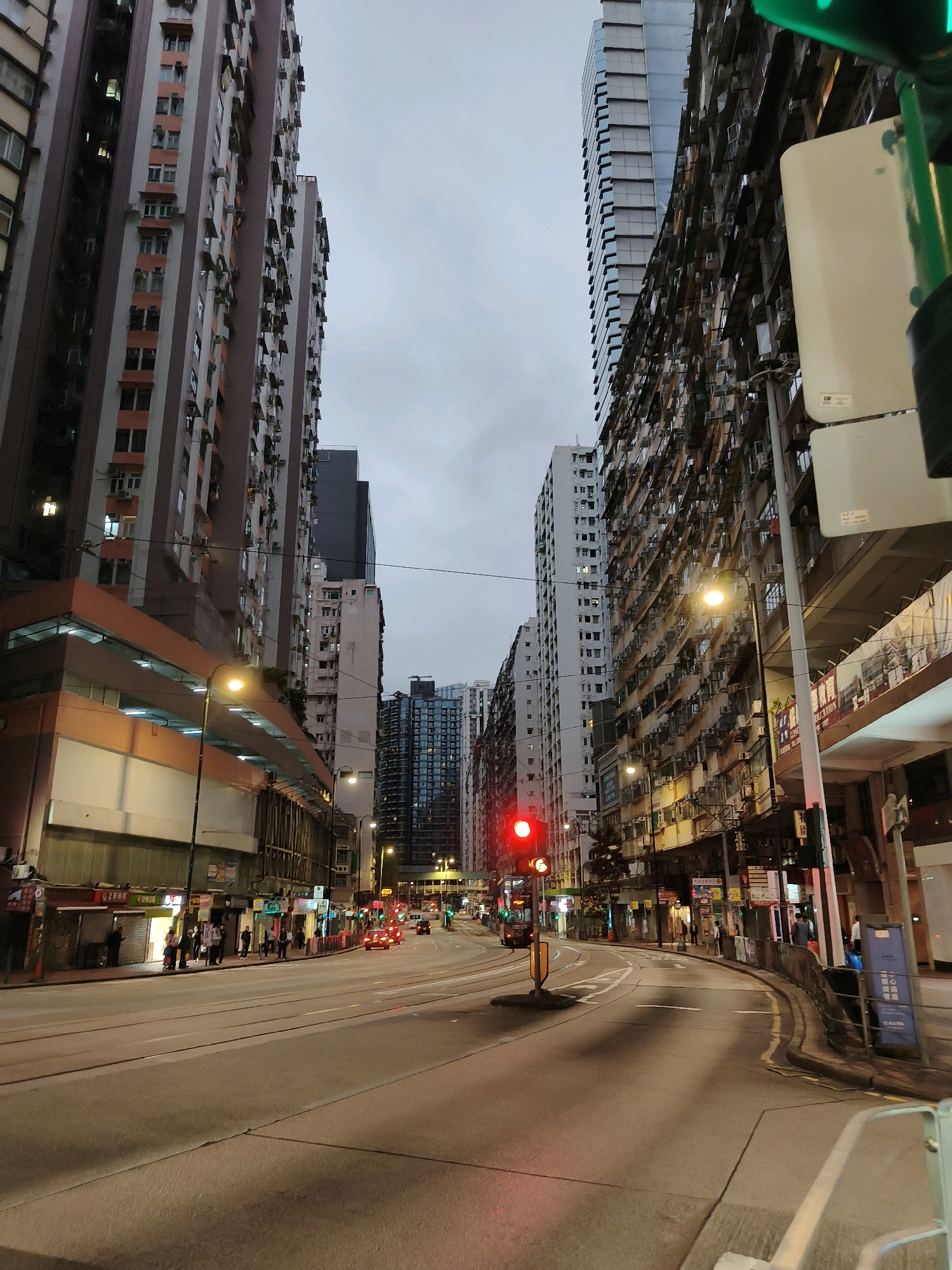
Someone pinned a memory from Hong Kong, China — on the map at Collective Memory → farcaster.xyz/miniapps/p0YEys75-OTm/open-wire-memories/memory/ef13ed55-be8e-4065-a?ref=reply

This is becoming one of the most fun and interesting times in Farcaster 🤘 Plus, we can even win some money while leaning about history. Lfg 🫡
How China became capitalist — in 59 seconds. In 1978, 18 starving farmers in Xiaogang risked their lives on a secret pact… and Deng Xiaoping turned their gamble into Shenzhen.
I really wish I could cosplay for most of these😭😂 Ughhh where can I find a Chinese outfit now …
How did Deng transform China? He didn't reform the whole country at once — he reformed one zone. Shenzhen: a fishing village turned into a laboratory for the market economy. What worked there spread everywhere. 57 seconds on how he did it 👇 @farcaster