Cast by whimsi.eth
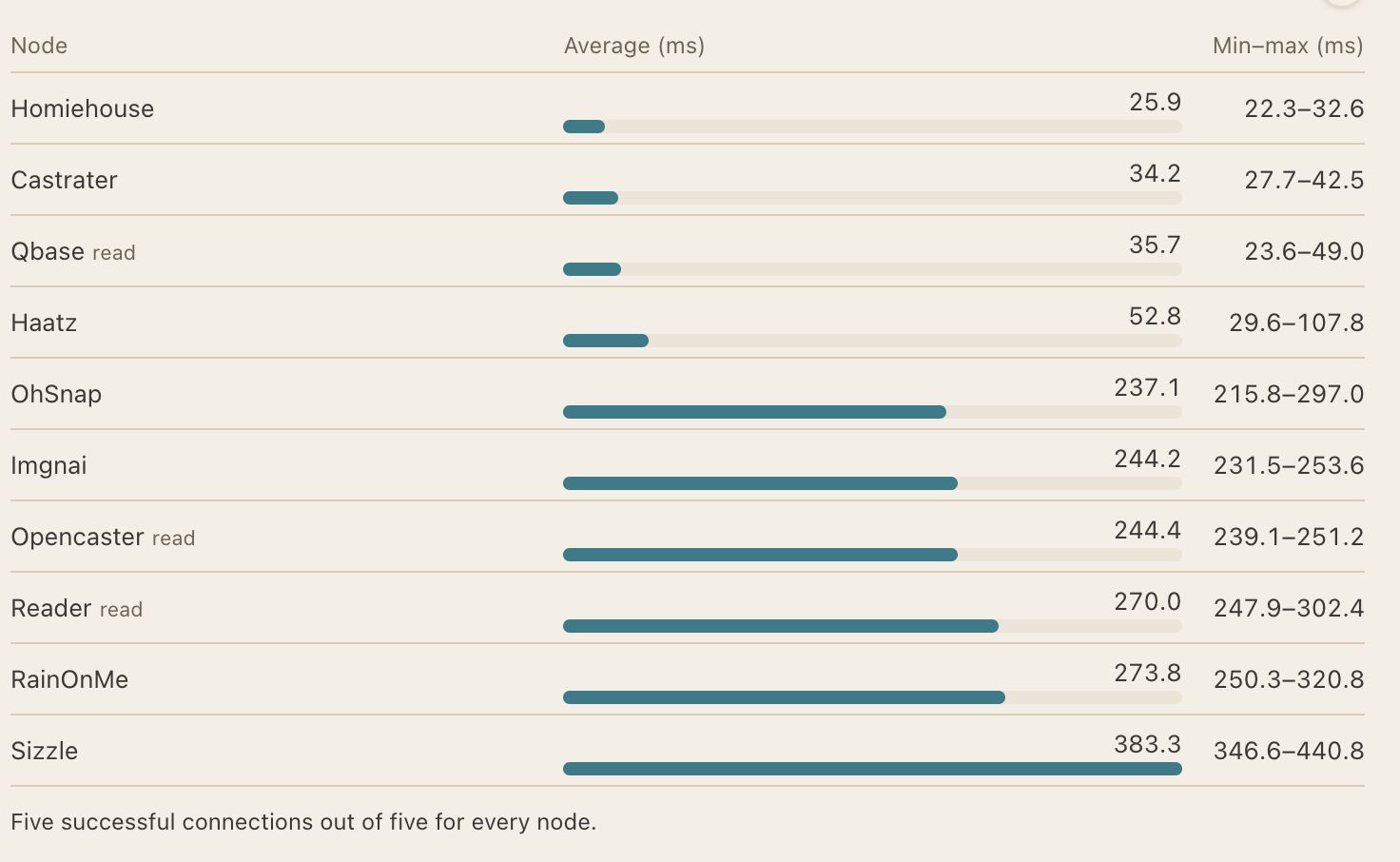
Show the cast this replies toappreciate the teaching moments, proof that vibe coding isn't quite as easy as point-and-shoot (or maybe it is, if i was using a more powerful reasoning model, but currently using 6.2 sol on medium) from what i can see, it's looking like there's no web-based version of checking unless Timing-Allow-Origin is exposed how are these numbers looking? closer to what you were expecting? (aus-based) codex mentions one thing to be aware of is that homiehouse's TCP listener answered quickly but the /v1/info requests failed in earlier browser tests - which i guess snapdiff must be using also to check whether a validator's status is up or down
1 reply
If you're testing from AUS, that could look reasonable, yeah! ``` arfonzo@rpi5 ~> curl -sS -o /dev/null -w 'HTTP: %{http_code} | DNS: %{time_namelookup}s | TCP: %{time_connect}s | TLS: %{time_appconnect}s | TTFB: %{time_starttransfer}s | Total: %{time_total}s\n' hypersnap.imgnai.com/v1/info HTTP: 200 | DNS: 0.002495s | TCP: 0.084490s | TLS: 0.180091s | TTFB: 0.646054s | Total: 0.646116s ``` (TTFB: time to first byte, just extra data in case you're interested, not really needed here for our discussion.) So you can probably do a combination of rules here. If you get a 200 OK response from the `/v1/info` endpoint, that is a good indication that it's up. Then you break it down into two data points from this: - online status: up from the HTTP 200 OK response. - latency: take TCP connect time: 84ms If it's down (no response from endpoint), forget the latency and just report it as offline. That's just one way to do it!