One of the easiest ways to get stuck onchain is having the right asset but the wrong gas token. Every blockchain has its own native token for paying transaction fees. Ethereum uses $ETH, Solana uses $SOL, and ZIGFinance uses $ZIG. But what exactly is gas? Gas measures the computational resources required to execute operations on a blockchain, while the network's native token is used to pay the resulting transaction fees. Whether you're swapping tokens, transferring assets, or approving a smart contract, you'll generally need some of that native token to cover the cost. Here's what that means in practice: On Ethereum, you'll need ETH to cover gas when making a swap. Holding USDC alone may not be enough to complete the transaction. On Solana, SOL is used to pay transaction fees. Even if your wallet holds other Solana-based tokens, you'll still need some SOL. On ZIG Chain, ZIG serves as the network's gas token. Having the assets you want to move doesn't eliminate the need for transaction fees. This becomes especially important when moving between chains. A token you hold on one network won't automatically cover gas fees on another. You need to consider the specific network you're interacting with. Before making an onchain transaction, ask yourself: - Which network am I using? - What is its native gas token? - Do I have enough to cover the transaction? - Have I reviewed the transaction details before signing? Not sure about gas tokens, network fees, or what you need before interacting with a DeFi protocol? Just Ask ORO. Get clear explanations and understand your onchain options before taking action. Understand the network. Know the cost. Stay in control. ORO is clarity.

Blockchain & Web3 Enthusiast 🌐 | Digital Explorer 💡| NFT Trader | Always Seeking New Ideas.
Top domains
10 link casts

Interested in Nvidia exposure beyond traditional stock markets? Tokenization is creating new ways to explore exposure to publicly traded companies through blockchain-based assets. For those curious about Nvidia, $NVDA, ORO can help explain NVDAon, a tokenized stock linked to Nvidia. But before trading any tokenized asset, it's important to understand what you're buying. What does NVDAon represent? How does it work? What risks come with holding it? How does trading it differ from buying traditional Nvidia shares? These are questions worth understanding before making a decision. With ORO, you can explore NVDAon in plain language, learn how it works, understand its risks, and get guidance through the trading process. Don't just chase exposure. Understand what you're holding. Want to explore NVDAon and understand how it works? Just Ask ORO.
Your recovery phrase is not a password to share. It's the key to your wallet. One of the most common tricks in Web3 is pretending to offer support through fake DMs or phishing websites, then asking users for their recovery phrase. Never share it. Not with someone claiming to be support, not with a website, and not with anyone promising to fix a wallet issue. A legitimate transaction requires you to review and authorize it with your wallet signature. Your recovery phrase should remain private. This is also an important part of how ORO works. You describe what you want to do, ORO prepares the transaction for you to review, and you decide whether to sign. Your recovery phrase is never needed in that process. Convenience should never come at the cost of control. Stay alert, question unexpected requests, and always review what you're signing. Protect your keys. Review every transaction. Never sign what you don't understand. Want a clearer way to navigate DeFi actions? Just Ask ORO.

Web3 is powerful, but understanding how to use it shouldn't require becoming a blockchain expert. Decentralized applications (dApps) allow people to interact with blockchain networks through smart contracts rather than relying entirely on centralized platforms. From swapping tokens and lending assets to staking, gaming, and decentralized governance, dApps serve different purposes across the Web3 ecosystem. But understanding how they work is only part of the journey. Users also need to recognize the risks. Smart contract vulnerabilities, phishing websites, malicious token approvals, network fees, and irreversible transactions are all important considerations. For beginners, the best approach is to start small: - Learn what a dApp does before connecting your wallet. - Use official links and trusted applications. - Never share your seed phrase or private keys. - Review transaction details before signing. - Understand the permissions you're granting. This is where better guidance can make a difference. With ORO, users can ask questions in everyday language, explore onchain opportunities, and understand transaction steps before approving them. You don't need to know everything about Web3 before getting started. You need the right questions, a willingness to learn, and control over your decisions. Explore the basics, understand the risks, and take your first step with clarity.

As AI becomes more involved in financial decisions, one question matters: who remains in control? AI can help users understand opportunities, compare options, and prepare transactions. But when it comes to irreversible financial actions, human approval should never be an afterthought. That's the principle behind ORO's approach. You explain what you want to do in everyday language. ORO prepares the transaction and presents it for your review. You examine the details and decide whether to sign. This distinction is important. AI should make financial decisions easier to understand, not take away the user's authority to make them. Automation can improve convenience, but control and accountability must remain with the human. As Katerinaviko shared in her conversation with Forbes, the future of AI in finance should keep people in control. ORO is clarity.
A stablecoin migration is more than just moving tokens. Understanding the process matters. The Noble USDC contract on ZIG Chain is scheduled to pause on January 12, 2027. If you hold USDC.n, this is an important update to pay attention to. The migration path is from USDC.n to USDC.inj. Before taking action, make sure you understand what you're moving, the steps involved, and what you need to review. This is where ORO can help make the process clearer. You can ask ORO to guide you through the migration, review the proposed steps, and understand the transaction before signing. Try asking: "How do I migrate my USDC.n to USDC.inj on ZIG Chain, and what should I check before signing?" Don't wait until the deadline to understand your options. Get informed, review carefully, and take action with clarity. Explore the migration with ORO. ORO is clarity.
Lending on one chain doesn't mean you've explored all your options in DeFi. Each blockchain has its own ecosystem of protocols, lending markets, and borrowing opportunities. The platforms available on Ethereum may differ from those on Solana or ZIGChain. That's why comparing across chains matters. For example, before choosing where to lend or borrow, consider: - Which protocols offer the opportunity? - What assets can you supply or borrow? - What interest rates and fees apply? - What risks and conditions should you understand? You don't have to search through every ecosystem manually. With ORO, you can ask for lending and borrowing options across Ethereum, Solana, and ZIGChain, then explore the available choices. Try asking: "Show me lending and borrowing options across Ethereum, Solana, and ZIGChain. Explain the differences and what I should consider before choosing." Explore beyond the chain you already know. Compare your options before making a decision. Just Ask ORO

Getting started with DeFi? Don't let unfamiliar terms and complicated steps put you off. One of the biggest challenges for beginners isn't just choosing a protocol. It's understanding what they're about to do. What does this transaction mean? Which network am I using? What fees should I expect? And what happens after sign? These are important questions, and you shouldn't have to guess the answers. With ORO, you can ask questions in everyday language, understand DeFi concepts, and explore what a transaction involves. When you're ready, ORO prepares the transaction for you to review before signing. For example, try asking: "I'm new to DeFi. Can you explain how swapping tokens works and walk me through what I should check before signing?" Start with questions. Learn at your own pace. Stay in control of your decisions. Your DeFi journey can begin with a simple conversation. Just Ask ORO

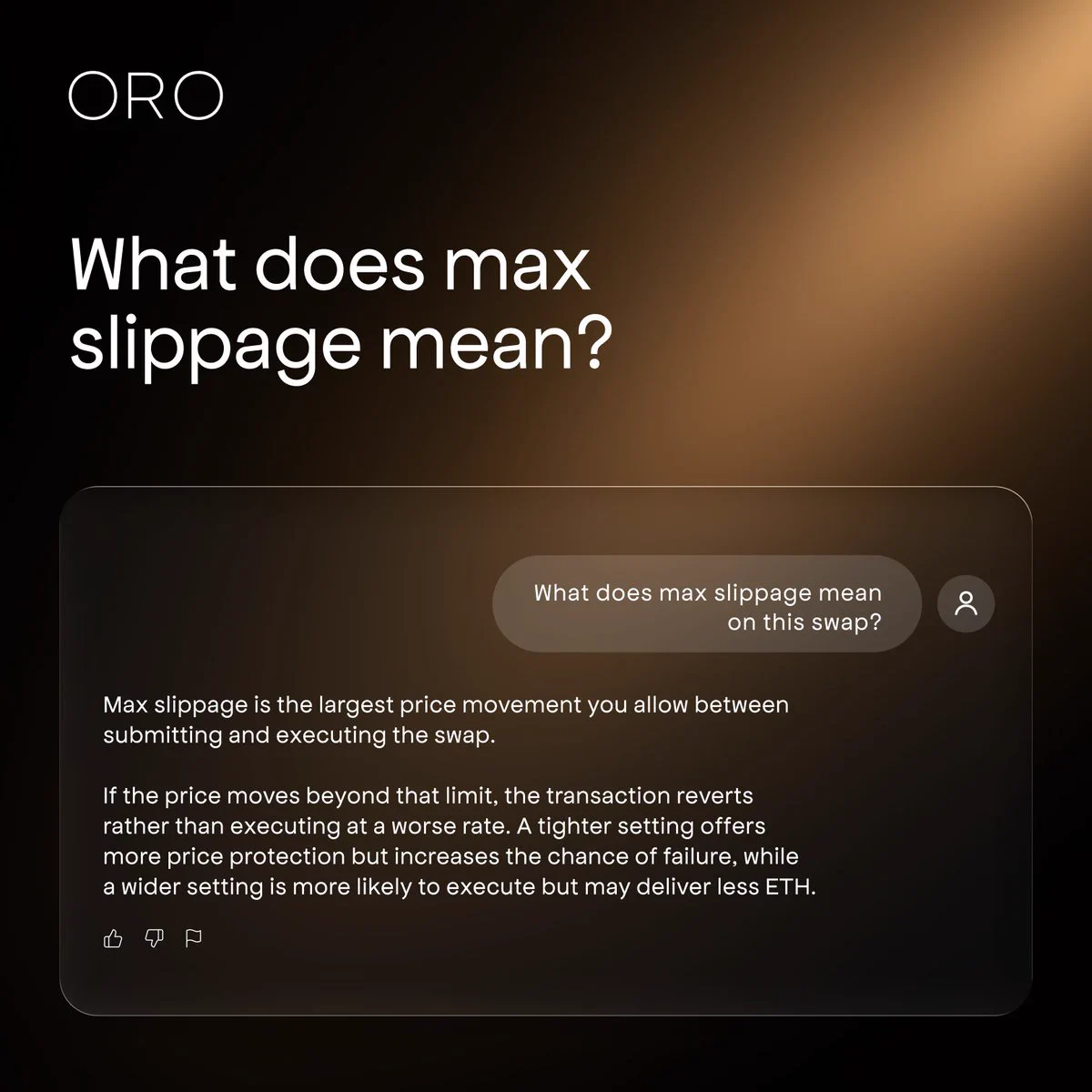
One small number can make a big difference in your swap. You see “Max slippage 0.5%” on a swap screen, but do you actually know what you're agreeing to? Slippage is the difference between the expected price of a trade and the price at which it actually executes. It can affect how much you receive, especially when market conditions change. Instead of guessing or leaving the app to search for answers, you can ask ORO to explain it in plain language. Try asking: “What does 0.5% max slippage mean for my swap, and what should I consider before signing?” Understand the details before approving a transaction. Don't just click through. Know what you're signing. Just Ask ORO:
Big congratulations to ZIGFinance on the launch of zEMS. Bringing Saudi SME private credit onchain is a significant milestone for the RWA ecosystem. With LaserDigital serving as risk framework advisor and the financing delivered through a single token on BNBCHAIN, zEMS introduces a new way to access Saudi SME financing. It's encouraging to see real-world financial opportunities being connected to blockchain infrastructure. Excited to see how this develops and what comes next for ZIGFinance. A big step forward for real-world asset adoption. Congratulations to the team.